
The Dawn of a New Era: What WordPress 7.0 Means for Your Website

WordPress has become an essential platform in the digital space, helping power a significant number of websites around the world. The WordPress community is eagerly awaiting WordPress 7.0, a significant release, as 2026 progresses. This represents a major improvement in performance, security, and collaborative capabilities, radically changing the way we engage with the platform. It’s not just another small update. Version 7.0 is set to usher in a new era for developers, business owners, and content creators alike with its revolutionary new editing experiences and important server-side changes.
Marking Your Calendars: The Tentative Release Schedule for WordPress 7.0
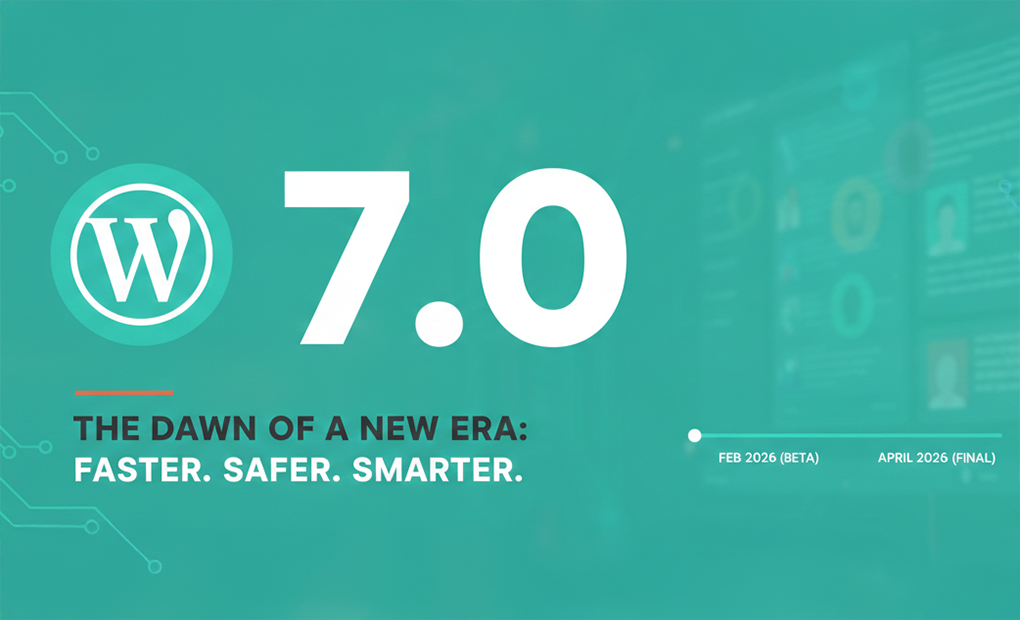
For those eager to get their hands on the latest features, the core development team has laid out a clear, albeit tentative, roadmap. The full public release of WordPress 7.0 is currently slated for April 2026. This timeline provides a crucial window for preparation and testing.
There will be a number of significant turning points along the way to that final release:
Beta 1: Anticipated in the middle of February 2026. Developers and daring users can test new features and report bugs in this first public testing version.
RCs, or release candidates: March 2026 will see the release of a number of Release Candidates. These feature-rich versions bring the platform closer to its final form by mainly concentrating on bug fixes and stability enhancements.
Why is this schedule important?
It provides developers and site owners with enough time to prepare for updates, test current plugins and themes against the new core, and guarantee a seamless transition. Active participation during the beta and RC stages can help resolve issues and make the final release more reliable for all users.
The End of the Road for PHP 7.2 and 7.3
Perhaps the most impactful, yet least glamorous, change arriving with WordPress 7.0 is the official discontinuation of support for PHP 7.2 and 7.3. For many, this might sound like technical jargon, but its implications are vast and critical for website performance and security.
Why is this happening?
WordPress is based on the server-side scripting language PHP (Hypertext Preprocessor). PHP is always changing, just like any software, with more recent iterations providing notable advancements in:
Security: Websites are susceptible to recently discovered exploits because older PHP versions are no longer receiving security updates. It’s like leaving your front door open in a busy city if you keep using them.
Performance: More recent iterations of PHP are significantly quicker and more effective. For example, switching from PHP 7.2 to PHP 8.0 (or higher) can increase website speed by 20–50% and decrease memory usage. This results in a more responsive dashboard for you and quicker loading times for your visitors.
What does this mean for you?
If your website is currently running on PHP 7.2 or 7.3, you must upgrade your PHP version before or immediately after WordPress 7.0 is released. Most reputable hosting providers offer easy ways to upgrade your PHP version through your hosting control panel (cPanel, Plesk, etc.).
How to check your PHP version:
- Through your WordPress dashboard: Navigate to Tools > Site Health > Info and expand the “Server” section. You’ll find your PHP version listed there.
- Via your hosting control panel: Most hosting providers display this information prominently in your cPanel or custom dashboard.
- Contact your host: If you’re unsure, your hosting provider’s support team can quickly tell you your current PHP version and guide you through the upgrade process.
A word of caution: Before making any significant changes, including PHP upgrades, always make a backup of your website. Even though the majority of contemporary themes and plugins work with PHP versions 8.0 and higher, it’s always a good idea to test in a staging environment first to avoid any unforeseen problems. This action by WordPress aims to move the entire ecosystem toward a more secure, quicker, and future-proof foundation rather than merely obsolescing outdated technology.
The Future of Collaboration: Gutenberg Phase 3 Arrives
While PHP updates address the “under the hood” mechanics, the most visible and exciting development in WordPress 7.0 is the continued evolution of Gutenberg with Phase 3: Real-time Collaboration. This marks a transformative shift in how teams, agencies, and multi-author blogs will work together within WordPress.
Consider the following scenario:
- A marketing team is concurrently developing a new landing page. Within the same editor, one person is writing the copy for the hero section, another is choosing product photos, and a third is fine-tuning the call-to-action button in real time.
- A significant investigative piece is being worked on by an editorial team. A smooth, dynamic workflow is made possible by the lead editor’s ability to see suggested edits, comments, and new paragraphs emerging in real time as writers contribute.
This is what Gutenberg Phase 3 promises. It seeks to directly integrate the collaborative capabilities we’ve grown accustomed to from programs like Google Docs, Notion, or Figma into the WordPress editing process. This is about more than just having several people in the same editor; it’s about:
- Simultaneous Editing: Seeing changes made by others in real time, with clear indications of who is editing what.
- Document Version Management: The platform captures each edit as it happens and stores it in a structured log, enabling users to revisit previous document states, examine how revisions were made, and safely recover an earlier version whenever necessary.
- Streamlined Workflows: Reducing the back-and-forth of sending documents, merging changes, and managing multiple copies. This will significantly boost productivity for any team that works together on WordPress content.
For agencies managing client sites, for news organizations with large editorial teams, or even for small businesses collaborating on their blog, this feature set will be a game-changer. It represents WordPress’s commitment to remaining a cutting-edge platform, not just for publishing, but for the entire content creation lifecycle.
Strategic Impact and What Comes Next
WordPress 7.0 is a strategic statement rather than merely a set of features. WordPress demonstrates its dedication to contemporary web standards, security, and performance by requiring PHP upgrades. By using the newest technologies, the platform is able to compete with newer, frequently more opinionated website builders. In the meantime, the collaboration features directly fill a gap that some rival platforms have taken advantage of, making WordPress a strong candidate for large-scale content operations.
This translates to a more reliable, quicker, and effective platform for you. It means spending more time producing engaging content and expanding your online presence rather than worrying about antiquated infrastructure.
To prepare for WordPress 7.0, here are some essential takeaways:
Check your PHP version: Make it a priority to guarantee that your hosting environment supports PHP 8.0 or higher well before April 2026.
Backup, Backup, Backup: Before any big upgrade (PHP or WordPress), always make a complete backup of your site.
Stay informed: Follow the official WordPress news sources and trusted WordPress blogs for notifications about beta releases and more information on Phase 3.
Consider a staging site: If you have a complicated website, create a staging environment to test WordPress 7.0 and its impact on your site before deploying it in production.
The road to WordPress 7.0 promises a future where your website is not only faster and more secure but also a more dynamic and collaborative space for content creation. Embrace these changes, prepare your site, and get ready for a significant leap forward in the world’s most popular content management system.
Need Expert Help? Partner with WPCaps
Navigating big core changes and server-side migrations can be difficult, especially for business owners who must focus on growth rather than troubleshooting. We recommend WPCaps for individuals wishing to make a smooth transition to version 7.0.
WPCaps provides high-quality professional services that are aimed to relieve you of technical stress. Their team provides 24/7 WordPress support, ensuring that your site is secure, up to current, and running well at all times. Whether you need assistance with obligatory PHP upgrades, emergency fixes, or preparing your site for the new Gutenberg Phase 3 capabilities, WPCaps offers the specialist knowledge required to keep your digital presence running smoothly.